

RECORDED MUSIC INDUSTRY OVERVIEW
Gambia
(Republic of The)
Africa
Potential of Recorded Music
We estimate the potential of recorded music value available to songwriters, music performers, publishers, and producers in Gambia. These are annual revenue levels achievable within a well‑functioning market supported by critical infrastructure, including robust policies, adequate legal frameworks, and effective collective management organizations and other enforcement mechanisms. By identifying these factors as the necessary drivers of growth, we quantify the opportunity cost of their absence.
The potential value calculations are based on CISAC, ICMP, and IFPI data. We used an econometric model and a cluster analysis approach to benchmark Gambia against peer markets and reflect achievable collection levels given their unique socio‑economic contexts. We also factored in a series of foundational assumptions and collective rights management expertise to provide a stable and realistic valuation.
1) Copyright: digital, performance rights (radio & TV broadcasting, rebroadcasting & retransmission, background music and private copying levies), CD & video, synchronisation and other;
2) Neighbouring rights: Streaming, performance rights (radio & TV broadcasting, cablecasting, cable retransmission, public performance, dubbing, private copying levies, and internet (webcasting, simulcasting, catch-up) licensing), downloads & digital, physical and synchronisation.
Coming soon

Socioeconomic Indicators
EXPLANATORY NOTES: Data via World Bank, using statistical databases and publications from national statistical offices, and UN and ESTAT publications. Accessed 15/01/2026.
2,759,988
EXPLANATORY NOTES: Data via World Bank Development Indicators database. Accessed 15/01/2026.
$8,439
EXPLANATORY NOTES: Data via World Bank, using national accounts data, and OECD National Accounts data files. Accessed 15/01/2026.
$871.34
5.55%
EXPLANATORY NOTES: Data via World Bank, using national accounts data, and OECD National Accounts data files. Accessed 15/01/2026.
EXPLANATORY NOTES: Data via World Bank, Poverty and Inequality Platform. Accessed 15/01/2026.
38.8%
EXPLANATORY NOTES: Data via IMF World Economic Outlook. Accessed 16/01/2026.
4.90%
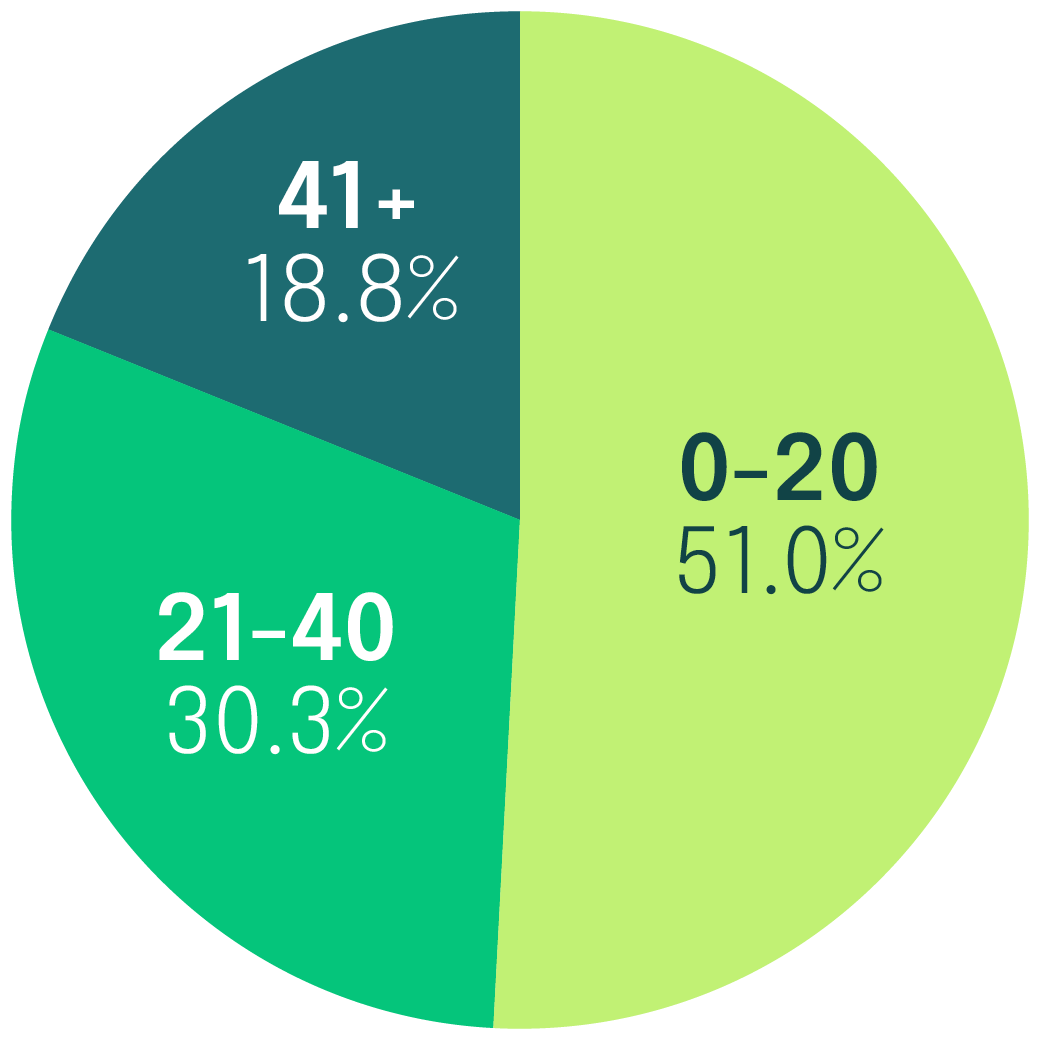
EXPLANATORY NOTES: Data via US Census Bureau International Database (IDB). Accessed 16/01/2026.
EXPLANATORY NOTES: Data via World Bank, using United Nations Population Division database. Accessed 16/01/2026.
64.30%
EXPLANATORY NOTES: Data via CIA World Factbook. Accessed 16/01/2026.
6.50%
EXPLANATORY NOTES: Data via CIA World Factbook. Accessed 16/01/2026.
10.90%
EXPLANATORY NOTES: Poverty rate at $3.00 a day (2021 PPP) (% population). Data via
Poverty and Inequality Platform, The World Bank. Accessed 15/01/2026.
22.00%
EXPLANATORY NOTES: Data via International Telecommunication Union (ITU) DataHub. Accessed 15/01/2026.
45.90%
EXPLANATORY NOTES: Data via World Bank Global Findex Database. Accessed 15/01/2026.
38.16%
EXPLANATORY NOTES: Data via World Bank Global Financial Inclusion Database. Accessed 15/01/2026.
2.00%
EXPLANATORY NOTES: Data via Cable.co.uk. Accessed 20/04/2026.
$3.56

Industry Infrastructure
Collective Management Organisations
Authors & Publishers
Performers
None
Producers
None
Voluntary Joint Ventures & Umbrella entities for licensing users
None
Associations
Music Authors
Music Publishers
None
Music Performers
Sound Recording Producers/Labels
Other
None
Music Export Office
None
Joint Industry Body
None
Policies
Culture Policy/Strategy
Music Policy/Strategy
None
Legal Framework
Digital and Performance Rights Treaties
Other Treaties
National Copyright Legislation
National Treatment
-
Gambia protects works of foreign authors who reside or of a body corporate incorporated in Gambia, works first published in Gambia or in another country and simultaneously published in Gambia within 30 days, and in accordance with treaties Gambia is a party.
Qualifying foreign authors enjoy protection concerning performance rights and digital exploitation of the eligible works. -
Gambia protects the rights of foreign performers and producers of phonograms in accordance with the treaties Gambia is a party.
Sound recordings are protected as works in Gambia; therefore, the same eligibility criteria as for works apply to sound recordings.
Foreign performers enjoy protection concerning reproduction rights. Foreign producers of phonograms enjoy protection concerning performance rights and digital exploitation of their sound recordings. -
“National Treatment” refers to the assimilation of the treatment of foreign right holders to that of domestic right holders. It is a basic rule of most international conventions and mandates that foreign rights holders from contracting countries must receive the protection within any other contracting country as that country grants to its own nationals, ensuring equal rights under the scope of the relevant convention.
General national treatment obligations are set out in Article 5 of the Berne Convention and Article 2 of the Rome Convention, providing that the members of respective conventions must grant to each other’s nationals the rights provided in the convention. Berne Convention also extends the national treatment to “the rights which their respective laws do now or may hereafter grant to their nationals,” while Rome Convention members are not obliged to extend national treatment to the rights of performers and producers of phonograms which are accorded under their national law over and above the rights enshrined in the Rome Convention.
The criteria for eligibility for protection are provided in Article 3 of the Berne Convention and Articles 4 and 5 of the Rome Convention. With regards to national treatment of producers of phonograms, members of the Rome Convention may reserve the right not to apply either the criterion of fixation or that of publication of the phonogram.
As per WIPO, the total number of members to the key treaties above is as follows:
Berne Convention: 181 Members
Rome Convention: 98 Members
WIPO Copyright Treaty: 118 Members
WIPO Performances and Phonograms Treaty: 114 Members
TRIPS Agreement: 166 MembersThis is a high-level overview concerning national treatment of music authors, performers and producers of phonograms; for comprehensive and detailed provisions, refer to the laws of each country. The overview:
1) details only the criteria applicable to foreign rights holders, without including the broader set of qualification rules for domestic protection that do not concern them,
2) is limited to performance rights and digital exploitation of recorded music, including works and other protected objects:
- “Performance rights” include radio and TV broadcasting, public performance, and communication to the public,
- “Digital exploitation” includes reproduction rights, distribution rights, communication to the public and making available rights.
The term "based on reciprocity" used in the overview for some countries means that Country A will protect the works of authors or other right holders who are nationals of Country B that is not a member of treaties Country A is a party to, and whose works or other protected objects were first published outside of Country A, only if Country B offer similar copyright protection to Country A’s authors or other rights holders and works and other protected objects respectively first published in Country A.
The term "treaty" in the overview includes conventions and international agreements.
Music Consumption
Domestic Repertoire Quotas
Yes
Based on the references to the provisions of the National Centre for Arts and Culture Act, 2003, “television and radio stations or similar media services shall promote Gambian arts and culture, through their programming, accordingly, shall apportion not less than 70% percent of the total time to programmes towards advancement and promotion of Gambian music”. However, despite the campaign by Gambian artists, to date, this provision does not seem to be implemented. The Gambia Public Utilities Regulatory Authority (PURA), which licenses radio and TV broadcasting, does not require broadcasters to meet any local content quota, but commercial broadcasters are merely asked to indicate the percentage of Gambian music in programming when applying for the licence.
Digital Streaming Services






GLOBAL STREAMING SERVICES
REGIONAL STREAMING SERVICES




DOMESTIC STREAMING SERVICES
None
Key Risks and Opportunities
Risks
While GDP growth rate suggests rising disposable income, a high GINI index, low nominal GDP per capita, coupled with a very high average cost of mobile data, creates a barrier to streaming frequency for low-income consumers.
Only 38.16% of the population has access to financial or mobile money accounts, and credit card ownership is negligible, which complicates direct-to-consumer monetisation and suggests focusing on telco-billing or mobile money for music consumption.
Non-adherence to key international treaties like the Rome Convention, WCT, and WPPT signifies a weak legal framework for protecting digital and performance rights, increasing the risk for investors regarding IP enforcement.
The lack of collective management of the rights of performers and producers means a hurdle for revenue generation for the music industry, including artist income, and investment attractiveness.
Opportunities
Large youth population and high urbanisation rate provide a solid foundation for the growth of digital music consumption.
Internet penetration and global account/mobile money ownership are moderate and, while still developing, they provide a baseline for digital distribution and monetisation via mobile platforms.
The presence of global and regional streaming services offers Gambian artists a pathway to reach international audiences.